
Aging questions · Research explainer
What do we mean by a longer, healthier dog life?
A longer dog life and a healthier dog life are not automatically the same outcome, and mixing them up changes what you should actually look for in research or care guidance.
 By Theo Marsh, Senior writer · 6 min read · Published · Updated
Is a longer dog life the same as a healthier one?
A longer dog life and a healthier dog life are not automatically the same outcome, and mixing them up changes what you should actually look for in research or care guidance. Lifespan is a count of years. Healthspan is a description of function and condition during those years.
A study can report one without saying much about the other. This distinction matters because breed and body-size research tends to answer the lifespan question directly, while saying little about symptoms, mobility, or quality of life along the way.
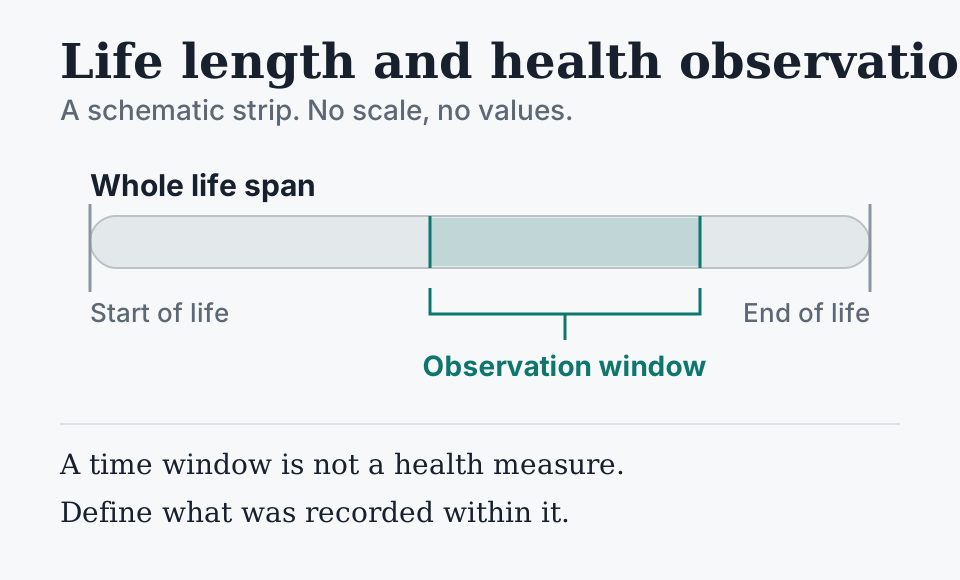
Large-scale UK breed survival work is one example. It uses recorded age at death and body-size categories to compare how long dogs of different builds and skull shapes tend to live, drawing on survival analysis across breeds and cephalic index groupings. That’s a lifespan measure. It leaves out how a dog felt at age nine or ten.
Repeated observations can show how a dog’s condition changes during life, alongside information about survival. Survival studies such as the UK breed analysis record age at death and stop there. The Dog Aging Project takes a different approach: it tracks survey responses, veterinary records, and biological samples across a dog’s life, as described in the project’s open-data cohort design.

Before trusting a claim about “longer, healthier lives,” ask which of the two, or both, the underlying data actually measured.
Look for the measure behind the phrase
The phrase “longer, healthier life” hides at least two separate measurements, and identifying which one a source used tells you what the claim can support. Lifespan studies typically rely on age at death, recorded in owner reports or veterinary files.
Healthspan efforts rely on something more layered. Researchers gather repeated surveys, clinical scoring systems, and biological samples throughout a dog’s years, adding to what a single end-of-life record could show. The Dog Aging Project’s design illustrates this layering directly.

Its cohort structure combines an annual owner-completed health survey, veterinary electronic medical record extraction, and a separate end-of-life survey capturing cause of death and perimortem care, according to the project’s published cohort and data-source tables. Each of those instruments measures something distinct.
An annual survey captures a snapshot of behavior, diet, and health history at one point in time. Veterinary records capture diagnosed conditions and procedures. The end-of-life survey asks about cause of death and perimortem care.
None of those instruments, by itself, equals “healthspan” in a single number. The 2022 Dog Aging Project design paper describes a Canine Multimorbidity Index: a weighted score based on veterinarian-reported presence or absence of 16 chronic conditions. This gives researchers a way to record disease burden alongside lifespan, adding detail that a lifespan number alone could not capture.
When you see a claim that a factor extends healthy years, check whether the underlying study actually collected repeated health data over time or whether it only recorded survival. A survival curve and a symptom log answer different questions, and a headline can blur them into one sentence even when the data behind it kept them separate.
Which dogs were counted?
Every longevity statistic depends on which dogs were counted and how, and that denominator shapes what the number can tell you. A median survival age calculated from a defined set of breeds is not the same statistic as one calculated from a mixed cohort of owner-enrolled dogs across breeds and life stages, even if both get summarized as “average dog lifespan.”
The UK breed survival research draws its estimates from a defined set of purebred and crossbred groupings, comparing them by body size, sex, and cephalic index, with phylogenetic analysis showing that median lifespan clusters by evolutionary lineage. The dataset includes living and deceased dogs from the participating sources. It is not a random sample of every dog.

Cohort-based research counts differently. The Dog Aging Project’s design separates its participants into distinct groups. These include a broad “Pack” cohort of enrolled dogs and smaller, more intensively sampled cohorts, each contributing its own kind of data instead of one uniform denominator, as outlined in its cohort structure. A finding drawn from a small, closely monitored subgroup doesn’t automatically apply to the wider enrolled population.
Before treating a number as representative of “dogs” broadly, check three things: which dogs were eligible, how they were recruited, and how mortality or health status was recorded for each. A statistic drawn from purebred registry records answers a narrower question than one drawn from an open, owner-nominated cohort.
A single sentence claiming “dogs live X years” often hides which denominator produced that figure.
Distinguish an explanation from a care instruction
A population finding about aging does not, by itself, establish a care instruction for your own dog. The distinction between an empirical result and a suggested organizational practice determines how much weight a claim should carry at home.
Take the UK finding that median lifespan clusters within particular breed lineages.
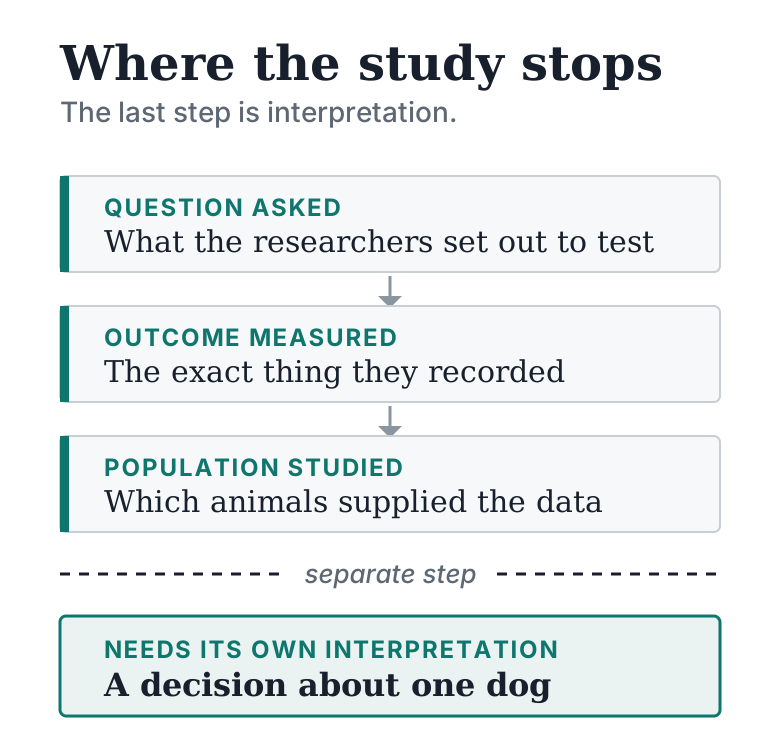
That’s a description of a data pattern across recorded populations. It doesn’t instruct an owner to do anything differently. It also doesn’t predict what will happen to an individual dog: a survival curve reflects outcomes averaged across a group, and any one animal’s future stays open.
Reading a headline, ask whether it reports what a dataset showed or whether it recommends how to organize checkups, diet routines, or monitoring schedules. The two can be related, but a care guideline reflects a professional body’s judgment about when to look for a problem, and a study finding reflects what a particular dataset measured under specific conditions.
Treating a lifestyle recommendation as if it were a proven biological mechanism, or treating a descriptive finding as if it were medical instruction, misreads what each source is actually built to do.
Ask a better next question
Skip the vague question of whether something makes dogs “live longer and healthier.” Ask which specific measure a claim is based on, and over what population. That reframing turns a vague marketing phrase into a checkable question: is this a survival estimate, a symptom score, or a veterinary diagnosis count, and which dogs contributed the data?
Longitudinal projects exist specifically because lifespan numbers alone can’t answer questions about function and condition across a dog’s years. The Dog Aging Project was built around collecting survey, veterinary, and biological data repeatedly over time precisely because a single birth-to-death record can’t capture how a dog’s health changed along the way, a design goal laid out in its description of ongoing data collection and planned biomarker validation. Their stated aim is to link environmental and genetic factors to aging measures and eventually validate candidate biomarkers against actual outcomes. The project stops short of claiming that any single product or practice already extends healthy years.

When you encounter a claim about longevity or healthspan, useful follow-up questions include:
- Was age at death the only measurement, or were health measures collected repeatedly during life?
- Which breeds, sizes, or cohorts were included, and does that match the dog in front of you?
- Is this a professional care guideline meant to time checkups, or a dataset finding meant to describe a pattern?
None of these questions require specialized statistical training. They just require reading past the summary sentence to the method underneath it, and treating “longer” and “healthier” as separate claims until the source says otherwise.